“We’ll Never Know What Happened — But We Know What Saved Him.”
In May 2020, when lockdown restrictions had just begun to ease, Andy Woollatt cycled to a friend’s birthday gathering. It was a quiet evening, and he set off home later that night as normal.
But he didn’t arrive.
By midnight, his wife Tahlia knew something wasn’t right. Andy wasn’t answering his phone. Eventually, a paramedic answered it instead. Andy had come off his bike and had been taken to the Intensive Care Unit at the Royal Berkshire Hospital.
Tahlia was told to get to the hospital as quickly as possible.
When she arrived, she was taken into a side room. She remembers thinking they were about to tell her he had died.
Instead, the ICU consultant explained that Andy was alive but critically injured. He had suffered a serious break in his neck, multiple fractures and a severe head injury. He had a Glasgow Coma Scale score of three – the lowest possible score, indicating deep coma.
Over the following days, Tahlia was only allowed to visit Andy in short 20-minute intervals due to COVID restrictions. The rest of the time, she waited in the ICU family room. “It was the worst and loneliest time of my life,” she said. “Just sitting in a windowless room, waiting. You couldn’t touch or talk to anyone. I couldn’t have my family with me. It was just me and the silence.”
When Andy woke up, he didn’t initially recognise their three children. His recovery was slow and uncertain. A few days later, consultants confirmed he had an incomplete spinal cord injury at C3/C4. He was paralysed on his left side, with limited movement on his right.
“Normal is off the table,” Tahlia remembers being told. “But there’s a chance he might make a reasonable recovery.” Throughout it all, she speaks with deep gratitude about the ICU team. “They were phenomenal. They allowed me to sit with him as often as possible. They talked to me, explained things, and made space for humanity in a completely inhuman moment.”
After leaving ICU, Andy continued his recovery through specialist rehabilitation, including a long stay at Stoke Mandeville and further spinal surgery 18 months later. Once a keen cyclist, he approached physiotherapy with determination. Today, he has returned to family life and work. Although he continues to live with the effects of his brain injury, chronic pain and fatigue, he has come an unimaginably long way.
For Tahlia, those early days in ICU have never been forgotten.
“I feel most passionately about that family room,” she said. “At the worst point in your life, you need comfort. Somewhere safe to cry, to rest, to breathe. Even just a book to take your mind somewhere else. That space matters more than people realise.”
It’s one of the reasons she shared her family’s story with colleagues at HCR Law. Moved by what Andy and his family had experienced – and by the care they received – the firm’s Thames Valley office, where Tahlia is a Partner in HCR Law’s Real Estate Disputes team, chose Royal Berks Charity as its Charity of the Year.
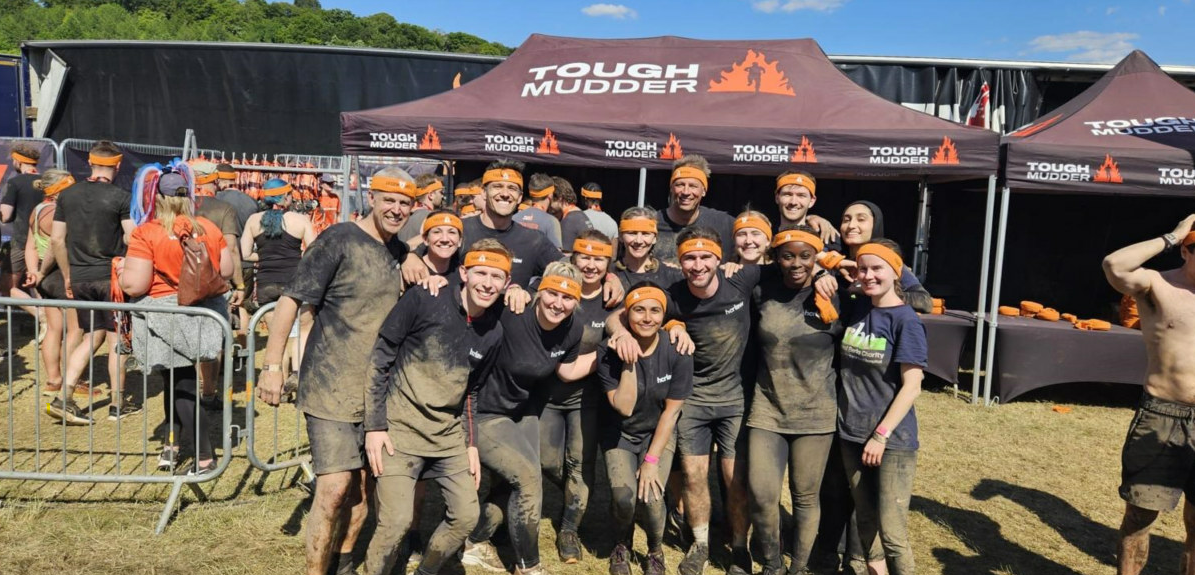
Last year, HCR Law’s Thames Valley team raised funds that will help improve the overnight room in the ICU. This space gives families somewhere to rest while staying close to their loved one at the end of life, allowing them to spend those precious final moments together. Now, for a second year, the partnership continues, with staff once again taking on challenges like Tough Mudder to raise funds that will support areas of greatest need across the hospital.
For Tahlia, it comes down to something simple:
“We were lucky. Not everyone gets that. If we can make it even a little easier for the next family sitting in that room, it’s worth everything.”